
When is the right time to buy your first home? It's a common thing to be pressured by family and peers in considering the right age to buy your own property. Some people are eager and ready enough to fulfill this American dream early while in their 20s. But others may want to take their time—nice and slow—and buy a house after they reached their 30s. For many people, this age means becoming more responsible and mature enough in dealing with their actions, decisions, as well as their finances.
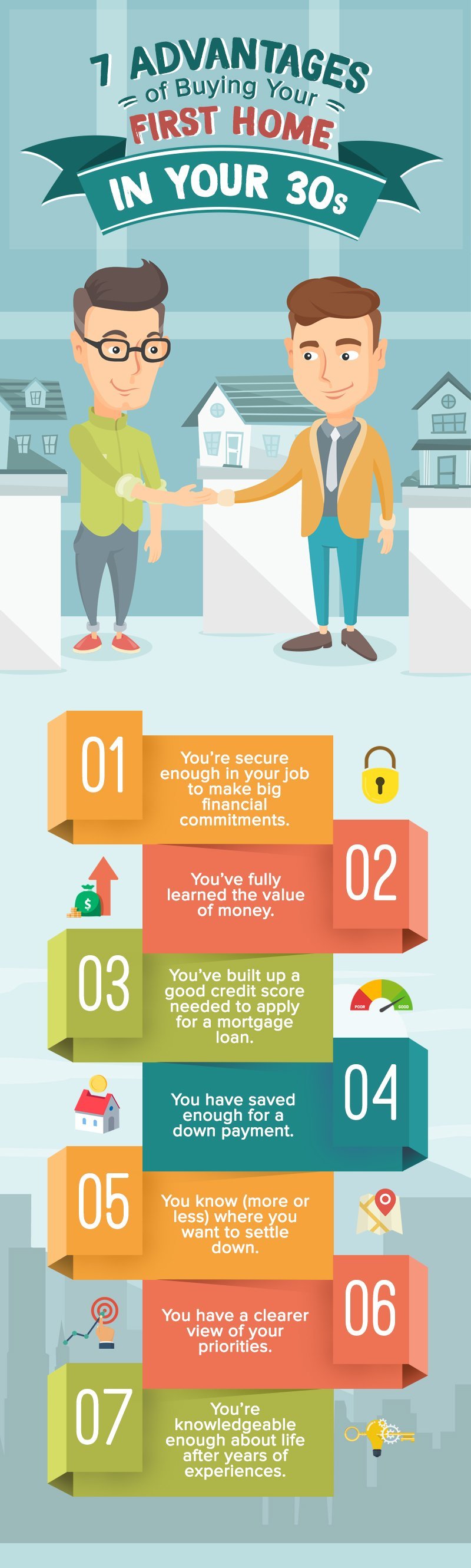
Here are some of the reasons why it makes sense to buy your first home in your 30s:
1. You're secure enough in your job to make big financial commitments.
Job security is an important factor that lenders take into account when borrowers apply for a mortgage loan. They want to see a solid history of employment and a steady flow of income that will help pay for the loan. While it's never easy to find a job that you can see yourself doing for a long time, many of those who are in their 20s are still figuring out what they really want to do. Many are still hopping from one job to another to look for “the one” and settle in the industry that they really love. And while they’re in the early stages of their career, it may be difficult for them to provide a stable work history. Those career-building years also typically mean they will be looking for a promotion or a job change that might require them to relocate.
For many people who are in their 30s, they’ve already reached the point where they have a secure job and are gradually establishing their careers. That puts them at a greater advantage when they take a plunge into homeownership. They are likely making much more than they were in their 20s, which makes big purchases like buying a home less difficult.
2. You've fully learned the value of money.
While in your 20s, you must have spent most of your money on many unnecessary expenditures—buying specialty coffees, eating out on new restaurants on weekends, or getting new gadgets every now and then. Well, we've all enjoyed that phase of our lives anyway. But as you grow older, you realize that those things won’t really help you build up your wealth. You’ve now learned how to handle your money responsibly and become more conscious on where you spend your hard-earned cash. You treat yourself only once a month and on special occasions, which helps to gradually build up your savings.
Being in your 30s likely means you’ve already paid down most of the debts you accumulated in your younger years, like student loans, car loans, and credit card debt. It’s important that you’ve reduced your debts first before making bigger financial commitments such as a home purchase. Banks will be more willing to approve you for a loan if they see that you handled your debt payments successfully and that they don’t eat up most of your income.
3. You've built up a good credit score needed to apply for a mortgage loan.
Your credit score is crucial when applying for a mortgage loan because lenders will use it to evaluate your capability as a borrower. For many young people, it's a common scenario to get rejected for a mortgage because of a bad credit score. Waiting until your 30s to buy your first home gives you time to build up your credit so it will only show what lenders would like to see. And as you grow older and wiser enough in handling your finances carefully, there’s a good chance that you’ve established a good credit history which makes you an ideal borrower.
4. You have saved enough for a down payment.
Buying your first home in your 30s gives you more time to put cash aside specifically for a down payment. Putting in the ideal 20 percent down will put you in a good position to qualify for a low-interest mortgage loan. And while you can buy a home even without putting 20 percent down through various grants and programs available, you still need to ensure that you have a significant amount of money that you can use for other costs associated with homeownership. There's the closing costs, repairs and maintenance, HOA fees, homeowners insurance, etc. The last thing you would want is to be house poor when you're already a homeowner.
Those who are solidly in their 30s are more likely to achieve that significant amount of money given their years of earning and saving. You will not exhaust all your funds after spending a large amount and you will also be able to replenish your savings and have enough funds for any unexpected emergency, health issues, and travel and leisure expenses.
5. You know (more or less) where you want to settle down.
After years of renting and moving in several cities or states, by 30, you may already have decided where you would want to settle down and raise your family. You already have a clearer idea of what you're looking for in a long-term home. It can be somewhere near your current workplace, or in a suburb where you can have a house with a bigger backyard.
6. You have a clearer view of your priorities.
Similar to deciding where you want to settle down, when you are in your 30s, you are now fully aware of your priorities. It's by this time that you must have realized that you really want to be a homeowner, which can help you build stability and equity. You must have decided about the type of house you want to buy, planned out your budget, and reviewed all other aspects related to homeownership. If you're not the type to tackle necessary DIY projects, then you know that you need to buy a move-in ready home or a new construction. This can be fairly difficult for young people who are still weighing their priorities and figuring out their life commitments.
7. You're knowledgeable enough about life after years of experiences.
Like what they always say: experience is the best teacher. As you get older, you also get wiser in knowing many of the technical things you didn't know you’d care about when you’re relatively younger. Your young and carefree years may be going away faster than you think, but surely there are valuable lessons gained along the way. Terms like inflation, insurance, real estate, mortgage, and whatnots are just some of the things you will start to care about.
And as you meet different people from all walks of life and take on more responsibilities, you also learn how to communicate effectively. You’ll know when to agree, prove your point, or when to compromise, which is crucial when negotiating for the house you want. Talk about adulting!
They say age doesn't matter. Well, maybe it does when it comes to buying a house, which is a major financial decision that needs to be carefully considered and planned. Buying a home before reaching your 30s is definitely a great achievement as long as you're handling your finances well. But waiting a few more years until in your 30s is a better idea if you want to be as prepared as possible, especially in building up your credit and savings. Think of it as your edge compared to those who rushed things to buy a home. Aside from that, you must have already read hundreds of tips and guides about real estate and the home buying process. Those preparations definitely help you become all set to have a place you can call your own.



![Your Home Buyer Wants To Extend The Closing Date—What Now? [PART 2]](https://images.squarespace-cdn.com/content/v1/68a79317dcab1b51a8b172d5/1764096602490-W0KN3Z48TY2DS319S06N/banner.jpg?format=200w)
![Your Home Buyer Wants To Extend The Closing Date—What Now? [PART 1]](https://images.squarespace-cdn.com/content/v1/68a79317dcab1b51a8b172d5/1763492277776-JQWE2ZAJFP1XBNSA8VIB/banner.jpg?format=200w)

