

The main reason cited by non-homeowners as to why they currently do not own a house is because they cannot afford to buy one, as revealed in the 2018 NAR Aspiring Home Buyers Profile. The results are highest at 56 percent in the last quarter of 2017. Also, many home buyers have already indicated that the most difficult step in the home buying process is saving for a down payment.
Likewise, many of these potential homeowners believe that you need a daunting 20 percent down payment to be able to buy your first home, so they already deem themselves ineligible without even trying. But the silver lining is that 61 percent of first-time buyers who purchased a home through a mortgage from December 2016 to November 2017 actually made a zero to 6 percent down payment, as reported in the NAR November 2017 Realtors Confidence Index.
And yet, coming up with a 6 percent down payment can still prove challenging for many — especially for low to medium-income earners, new graduates who are still paying student loans, single parents, or those who are still recovering from credit card debt. To help you kick-start your home buying process, here's a list of grants and loan assistance programs you could check out to help you afford a mortgage to get your dream home.
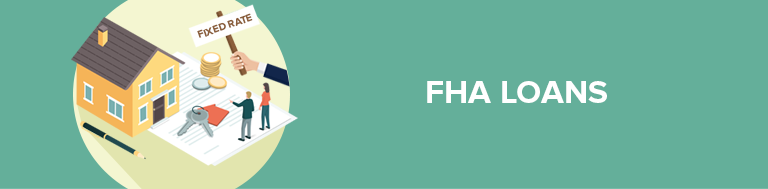
An FHA loan is a mortgage insured by the Federal Housing Administration (FHA), an agency within the U.S. Department of Housing and Urban Development (HUD). Their most popular home loan is the 203(b) FHA Fixed Rate Mortgage Loan Program, especially for first-time home buyers. It keeps a buyer's down payment to a minimum and could also reduce the closing costs.
FHA loans could greatly benefit those who want a home but have little or no money saved for a down payment; including students who just graduated from college, newly married couples, and also those who have had credit problems in the past because of foreclosure or bankruptcy.
Pros:

Those who have a credit score of 580 or higher can get a mortgage with a down payment of as low as 3.5 percent. For those with credit scores lower than 580, they can still qualify for an FHA mortgage, but the down payment will be at least 10 percent of the home's purchase amount.

Borrowers can use many sources of cash to make a down payment, including from their own savings, a gift from a family member, or a grant from a down payment assistance program. The FHA has a list of these grants to help you search for the best assistance program that suits your situation.

In an FHA loan, home sellers, builders and lenders could offer to pay some of the borrower's closing costs, such as an appraisal, credit report, or title expenses, as an incentive.
Cons:

FHA loans require a borrower to pay mortgage insurance, unlike conventional loans. This backing protects private lenders from delinquent borrowers. Despite the mortgage insurance requirement, it remains one of the most popular mortgage options that have a low down payment.

Because the FHA is only an insurer, borrowers need to get their loan through an FHA-approved lender. However, these lenders don't offer the same interest rate and costs even on the same FHA loan. So it’s important to shop around for an FHA-approved lender that offers the best interest rate to help you.
The home buyer assistance programs offered by the U.S. Department of Agriculture (USDA) help borrowers or families with low and moderate incomes obtain a decent and safe housing in rural areas.
Pros:

If you qualify for a USDA loan, you will receive 100 percent financing with no down payment necessary. The loan payments are also fixed because the USDA offers mortgage guarantees to lenders.

These loans aren't confined to farmland, so there’s no need for a borrower to run or buy a farm to be eligible. However, the properties must be in areas with a population below 35,000, which are mainly rural areas. But there are also some suburban areas that can qualify for the program.
Cons:

The program has income limitations, which vary per region according to the average median income of the area.
Veterans, active-duty service personnel, and select Reservists or National Guard members, as well as spouses of military members who died while on active duty, are among those who can qualify for VA loans offered by the U.S. Department of Veterans Affairs.
Pros:

VA loans come with competitive interest rates and require no down payment, which is a huge plus. These loans are also more lenient when it comes to bankruptcy and foreclosure than other loan products.

Borrowers are not required to purchase a private mortgage insurance. This benefit can help borrowers secure additional monthly savings.
Cons:

Only VA-approved appraisers can inspect the home chosen by the service member to make sure they meet minimum property requirements and that they are “safe, sound and sanitary.” VA appraisers also tend to have stricter standards than a typical home appraiser.

Although VA does not require a minimum credit score for a home loan, lenders generally have their own additional requirements and may add their own “overlays.”
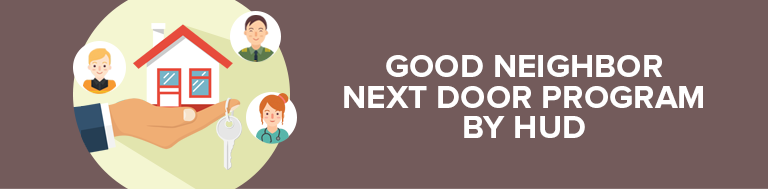
The Good Neighbor Next Door Program is sponsored by the Department of Housing and Urban Development (HUD) and provides housing aid for people who belong to certain professions. Those who are eligible include law enforcement officers, pre-kindergarten to 12th-grade teachers, firefighters, and emergency medical technicians (EMTs). The initiative is designed to encourage the renewal of “revitalization areas,” which are neighborhoods that have low household incomes, low homeownership rate and a high number of foreclosures of FHA-insured properties.
The listings of houses for sale under this program can be found on the HUD Homes website. Houses must be purchased through a real estate agent who understands the GNND program because the realtor will be the one to submit a lottery bid online.
Pros:

A buyer can receive a 50 percent discount on the list price of an eligible property that is located in revitalization areas by committing to live in the property for at least 36 months.
Cons:

There are certain housing conditions for each profession. For teachers, the house must be located within the neighborhood boundary of the school where the teacher works. Meanwhile, for firefighters or EMTs to qualify, they have to serve the jurisdiction where the house is located.

A buyer must weigh in the location versus his/her savings when buying a home through the GNND program because most available properties are located in areas of rural abandonment or those which many people are reluctant to live in.
For those who are having difficulty saving for a down payment, this program provides down payment and/or closing cost assistance in the form of a non-repayable grant of up to 5 percent of the loan amount. Yes, you read it right — the DPA grant never has to be repaid. It also decreases home buyer costs and avoids burdening the buyer with additional debt. The borrower can also choose to apply to either an FHA, VA, USDA or any conventional mortgage loan.
The NHF offers two DPA programs — the NHF Sapphire program and Golden State Finance Authority Platinum program — both have different sets of requirements but are for low to moderate-income earners.
Fannie Mae and Freddie Mac are both government-sponsored entities that work with local lenders to offer mortgage options that benefit low and moderate-income families. Fannie Mae is another name for the Federal National Mortgage Association (FNMA), whilst Freddie Mac is another name for the Federal Home Loan Mortgage Corporation (FHLMC). Both entities were initially formed to stabilize the US residential mortgage market and expand opportunities for home ownership and affordable rental housing.
Through the support of these companies, local lenders can offer competitive interest rates and appealing mortgage options, including down payments as low as 3 percent of the purchase price.
Many states and cities offer a variety of down payment assistance programs to help first-time home buyers afford a mortgage. Most of these programs are location-specific and income-dependent, but many are designed for low-income buyers who need additional assistance.
In Texas for an instance, the My First Texas Home Program offers a 30-year fixed-rate loan with closing cost and down payment assistance equal to 5 percent of the loan amount (up to $8,000), but a minimum credit score of 620 is required. While in Colorado, a buyer with a minimum credit score of 680 can qualify for a 30-year purchase loan with a down payment as low as 3 percent and no mortgage insurance, through the CHFA Advantage Program.
Check with your lender or your local real estate agent to know the list of housing grants and programs available in your state/area, and know the best program for which you are eligible and might apply to your situation.



![Your Home Buyer Wants To Extend The Closing Date—What Now? [PART 2]](https://images.squarespace-cdn.com/content/v1/68a79317dcab1b51a8b172d5/1764096602490-W0KN3Z48TY2DS319S06N/banner.jpg?format=200w)
![Your Home Buyer Wants To Extend The Closing Date—What Now? [PART 1]](https://images.squarespace-cdn.com/content/v1/68a79317dcab1b51a8b172d5/1763492277776-JQWE2ZAJFP1XBNSA8VIB/banner.jpg?format=200w)

