Planning to buy your first luxury home? Best be prepared by following these seven expert tips!
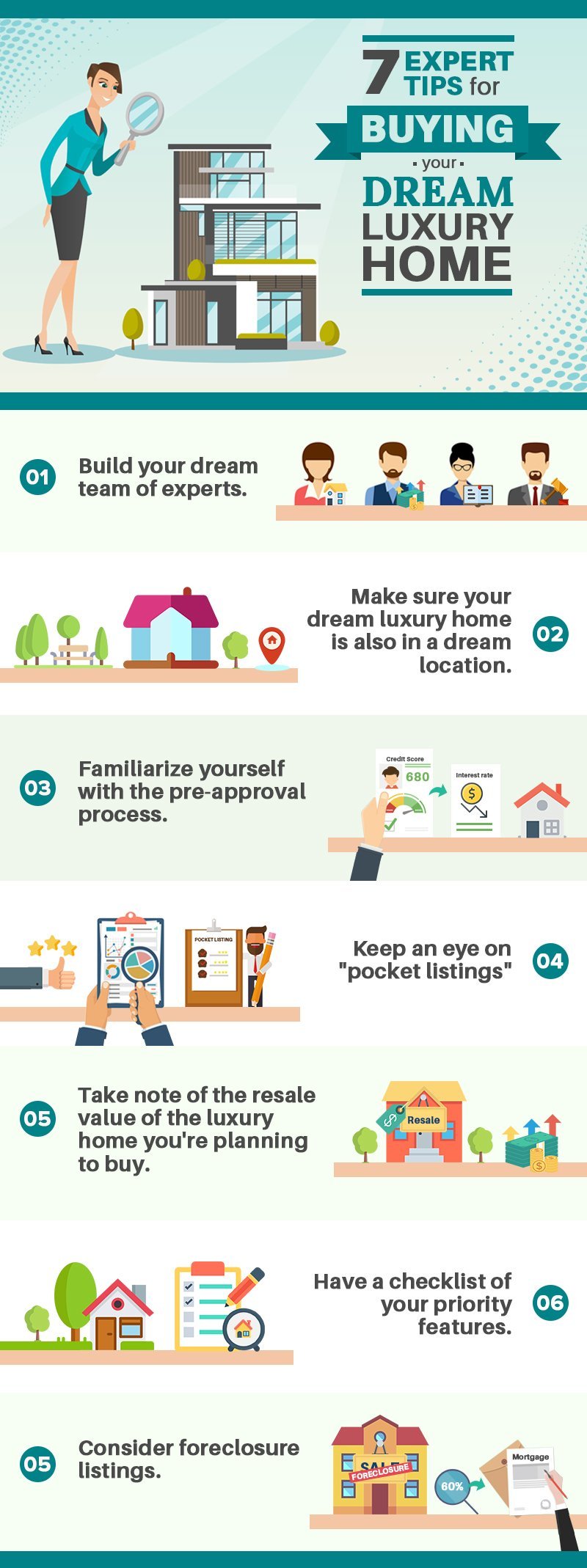
1. Build your dream team of experts.
When buying a luxury house, it is highly recommended that you employ the help of an excellent real estate agent, a trusted financial advisor and accountant, and a lawyer who will be ready to walk you through local tax and property law.
Choose a real estate agent that has a solid track record in the luxury housing market. While it is fine to call your trusted agent, your first luxury home purchase may need the expertise of someone who has already had success in dealing with this unique sector. The right real estate agent will have gleaming testimonials and reviews from satisfied luxury home buyers, preferably from the area where you are planning to purchase your luxury home.
Look for a trusted financial advisor and accountant who will truly have your best interests at heart. Hiring a lawyer who is familiar with local tax and property law will also save you a lot of time and headache down the line.
When you successfully put together a great team that will guide you through this luxury home-buying process, you can expect to have the keys to your dream luxury home in the quickest possible time.
2. Make sure your dream luxury home is also in a dream location.
Research the entire vicinity of the home you are eyeing. If you're planning to purchase a luxury home to retire in, you may want to choose one that is located in a sparsely populated area, or one that will offer you a stunning view of the city that surrounds it.
Since location has a significant impact on taxes, travel time, schooling, and other areas of your lifestyle - you may want to take your time researching which luxury home location suits your purposes best. If you're planning to add more features to your home such as a large veranda, pool, or a massive garden, you have to make sure that the house you're going to buy is not in a densely populated area. Which is to say that you can't rely on online listings alone; getting a feel of the house itself, as well as its surrounding community is the best way to gauge the quality of a home's location.
3. Familiarize yourself with the pre-approval process.
The process of applying for a mortgage to buy a luxury home is entirely different from getting a conventional mortgage. Lenders may require a credit score of 680 or better - and the better your credit score is, the lower your interest rate will be. Your team of experts will know about this so do not hesitate to talk to them about your concerns. Being knowledgeable of the differences between getting standard mortgages and luxury home mortgages will better prepare you for the home buying process.
4. Keep an eye on "pocket listings"
A lot of high net worth individuals do not market their listings publicly. Their listings are only shown to pre-screened, qualified buyers who can show proof of financial capacity to make a multi-million dollar purchase. As you won't find their homes listed in the MLS, it is best to make sure that your realtor is in contact with other luxury agents who can help show you pocket listings that may suit your standards.
5. Take note of the resale value of the luxury home you're planning to buy.
While your decision to purchase a luxury home must align with your unique tastes, you must always consider how a particular home will appeal to future buyers should you decide to resell. If you think you'll be having resale challenges due to the unique nature of a luxury home, it is best to negotiate an excellent price to offset said challenges.
6. Have a checklist of your priority features.
When looking for the perfect luxury home, it is best to know exactly what you want. Having a checklist of features you want to have in a home will keep your priorities in check, and will prevent you from making an emotional purchase (i.e., when you get lured into buying a house with a massive pool that you don't need). Is your privacy the most valuable thing to you? Make sure your potential home isn't located in an area where passersby can't easily take a peek into your home. Do you spend most of your free time cooking? You may want a house with a beautiful, Tuscan-style kitchen. Knowing what you want from the get-go will make it easier for you to narrow down your options.
7. Consider foreclosure listings.
If you want to purchase a luxury home that is being sold considerably below its actual value, checking out foreclosed properties can be your best bet. Roughly 60% of foreclosed homes can be financed through your lender of choice, so you don't have to worry about buying with cash. Consult with a home mortgage consultant to determine whether it would serve you better to use financing or to buy with cash.
Keep in mind though, that buying foreclosed homes means that you're buying it at its current state, and no upgrades will be made available to you before the big purchase. While you'll be able to save money by buying a foreclosed home, you have to factor in the amount you'll be spending on repairs and upgrades. Hire a trusted home inspector to check whether you're overspending by purchasing a foreclosure.