
Whether you are a homeowner planning a major remodel or a seller preparing to put their home on the market, an important factor you have to consider is the products and materials you will use. This time, why not try to become more environmentally conscious when remodeling your home?
You can incorporate eco-friendly and energy-efficient products into your home renovation ideas, especially those green solutions that are easily available and affordable. One benefit is that there are certain tax incentives for homeowners who installed alternative energy upgrades, stated in the Residential Energy Efficient Property Credit.
According to the REALTORS® and Sustainability 2018 Report by the National Association of REALTORS® Research (NAR) Group, 71% of respondents said energy efficiency promotion in listings was very or somewhat valuable. Many MLS has green data fields that real estate agents typically use to promote green features, energy information, and green certifications. Likewise, 56% of these REALTORS® find that clients are at least somewhat interested in sustainability.
Here are the major reasons to take on eco-friendly home improvements:
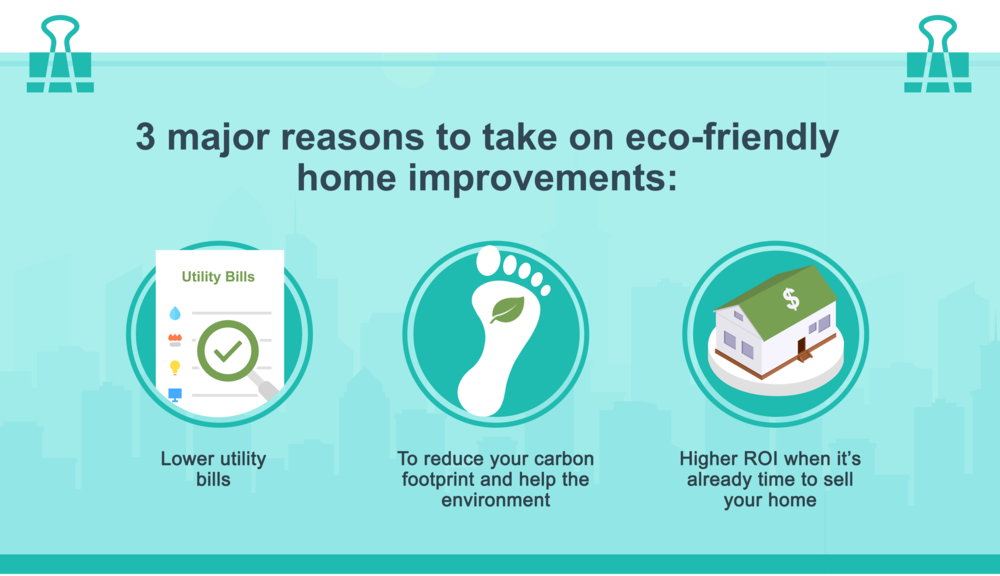
Lower utility bills - In the same report, 28% of REALTORS believe a home's utility bills and operating costs is one of the home features that are most important to their clients. Energy-efficient upgrades can help reduce your water and energy bills — a significant return on investment that any homeowner will appreciate.
To reduce your carbon footprint and help the environment - Tackling these environmentally friendly projects promotes healthy living for you and your family, while helping to save the planet.
Higher ROI when it’s already time to sell your home - Eco-friendly home improvements, especially in the kitchen and bathroom, add value to the home itself. They will be more prominent when it’s time to put your home on the market. Likewise, for buyers who are interested in an energy-efficient home, they can connect to a lender who provides lending products that encourage energy efficient improvements to existing homes.
Yes, there’s more you can do as a homeowner aside from using LED bulbs for your lighting fixtures. Here are some of those green home improvement projects that are relatively low-cost and easy to add or install:
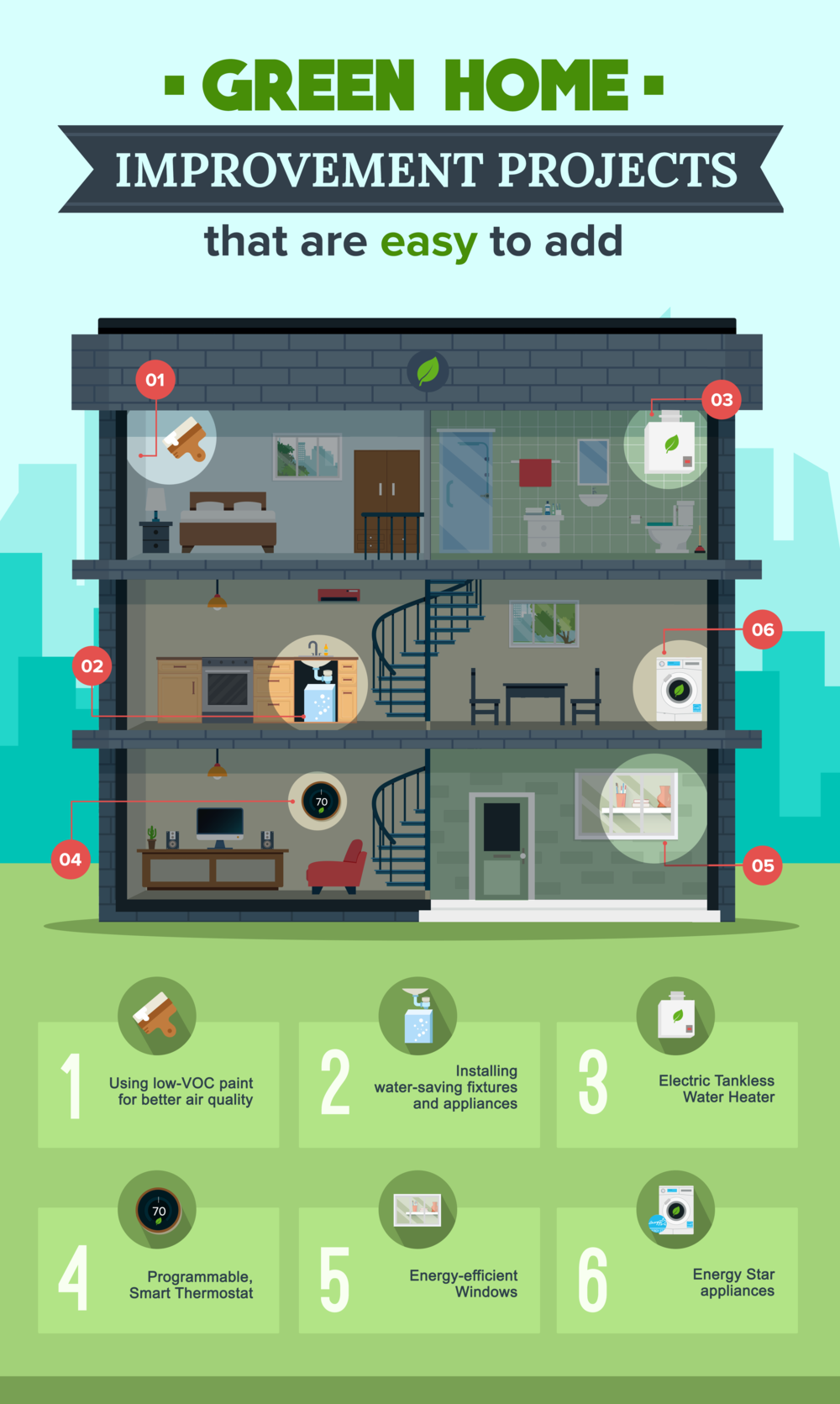
1. Using low-VOC paint for better air quality
Adding a fresh coat of paint to any room is a surefire way to transform it and make it look new. It's also one of the minor fixes that home sellers can do before listing their home for sale. However, many paints contain high levels of volatile organic compounds (VOC), which can cause several respiratory problems and contribute to ozone pollution.
So next time you want to apply a fresh coat of paint to renovate a room, opt for low-VOC or non-VOC paints. These are water-based paints that are generally more environment-friendly than oil-based paints with high VOC content. You will end up with a room that looks not only fresh but also has better air quality.
2. Installing water-saving fixtures and appliances
Whether you are planning a kitchen or a bathroom remodel, it’s a good idea to replace your regular fixtures and appliances with their water-saving counterparts. Installing low-flow fixtures and appliances like faucets, shower heads, dishwasher, and even high-efficiency toilets, can help lower your water consumption. It’s a great way to conserve water without compromising your daily usage and comfort. Eventually, it can offer big savings in your wallet by trimming your water bills — an advantage that you and the future owner of the home can both enjoy.
Toilets, for example, account for nearly 30 percent of an average home’s indoor consumption. Switching your older, inefficient toilet with a low-flow model can lower your water bills by about $110 a year, according to the Environmental Protection Agency (EPA). Think about it: you can save your wallet and the planet at the same time.
3. Electric Tankless Water Heater
Another great option you can add on your next bathroom remodel is a tankless water heater, which is a great way to save water, money, and energy. Tankless water heaters either use gas or electricity and are generally more cost efficient. They heat water you only need to use in just seconds and there’s no need to wait for the water to heat up while wasting more water in the process. It’s another eco-friendly bathroom improvement that can add value to your home.
4. Programmable, Smart Thermostat
Compared to manual thermostats, this smart home technology is a great investment to help make a home more eco-friendly. Smart thermostats, such as the Nest Learning Thermostat, can help you save energy and lower your utility bills since you can control your heating and cooling needs.
The technology will also allow you to program your temperature preferences on the areas where you need it most. You can set up these thermostats (through their mobile apps) to turn on when you wake up and turn off when you leave the house, contributing to bigger savings.
5. Energy-efficient Windows
Energy-efficient dual pane windows made from vinyl, metal or wood offer better insulation for your home compared to older, single-pane models. They can reduce your energy usage during both hot and cold climates, helping you save money while also lowering your environmental footprint.
Double-paned windows also have great soundproofing qualities. They can significantly reduce outside noise, which can be a valuable investment if you live in the city or in a busy urban area and don’t want to wake up to the blaring car horns or sprinklers early in the morning.
6. Energy Star appliances
Replacing your dated appliances with new and high-efficiency models, especially those with an ENERGY STAR certification, will not only allow you to reap the benefits of energy savings but also help sell your home for top dollars. ENERGY STAR is an initiative of the U. S. Department of Energy that identifies energy-saving appliances and products. Its ceiling fans, for example, are 50% more efficient than conventional fans because they use less energy to operate.
Since the kitchen is a focal point in any house, home buyers will want it to look at its best. If you’re planning a major kitchen renovation, upgrading your washer, dryer, dishwasher, and refrigerator will enable your kitchen to stand out in terms of energy efficiency, design, and functionality.
On the other hand, here are some big-ticket renovation ideas if you feel you’re up for it:
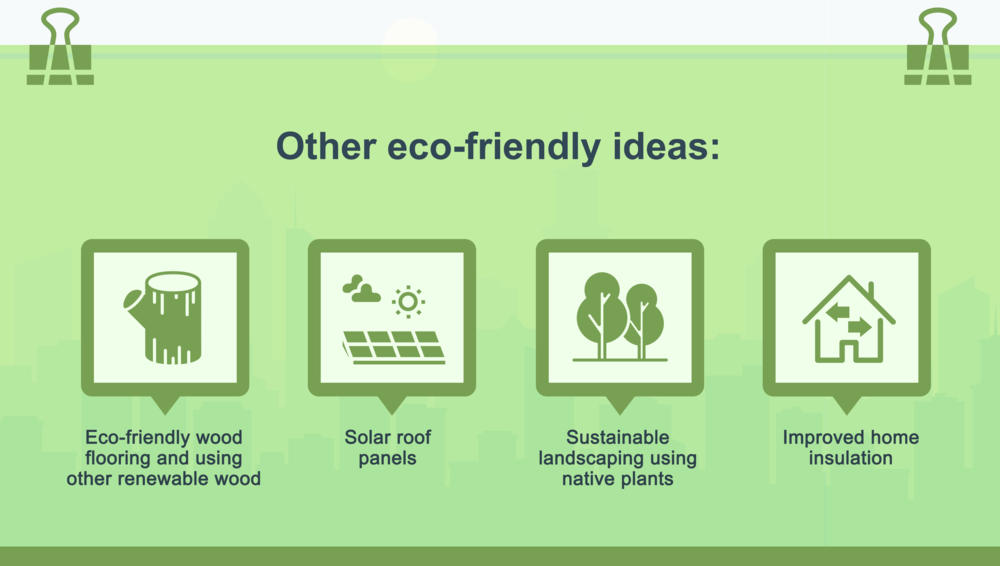
Eco-friendly wood flooring and using other renewable wood products - Options include bamboo flooring, marmoleum, and other eco-friendly wood flooring substitutes.
Solar roof panels - Homeowners who install solar panels, especially when installing a new roof, can receive rebates and credits from the solar power owner or utility company.
Sustainable landscaping using native plants - One eco-friendly alternative to improve your home's curb appeal is landscaping using native species of plants. These plants are easier to maintain, and won’t be a risk to the surrounding ecosystem.
Improved home insulation - Homeowners can switch to alternative types of insulation that are environmentally conscious, such as insulation made of wool, cotton, or other recycled materials.
Tips on how to effectively sell your energy efficient home:
Find a real estate agent with an extensive background in selling green homes or energy efficient homes. Clear communication is important for selling these upgrades to potential buyers. They have to see for themselves what they will buy and benefit with as the homeowner. This is why finding the right real estate agent who understands the benefits of your energy-efficient home is paramount. He/She should be able to advertise it appropriately, marketing it to the right buyers. The agent should also be able to explain those green upgrades to those interested buyers effectively.
Documentation can help you sell faster. It's important to not only feature the upgrades you made but to also highlight the benefits of those projects for you as a homeowner. Compare your water and energy bills before and after the remodel and emphasize how much you saved. The difference in your utility bills will be a good selling point your interested buyers will look forward to.
Consider getting an appraisal from a certified appraiser who knows how to properly evaluate green properties to determine the value of your energy-efficient improvements. This is a good first step to help you decide how much you should list your property, aside from the list price you and your real estate agent will come up with.



![Your Home Buyer Wants To Extend The Closing Date—What Now? [PART 2]](https://images.squarespace-cdn.com/content/v1/68a79317dcab1b51a8b172d5/1764096602490-W0KN3Z48TY2DS319S06N/banner.jpg?format=200w)
![Your Home Buyer Wants To Extend The Closing Date—What Now? [PART 1]](https://images.squarespace-cdn.com/content/v1/68a79317dcab1b51a8b172d5/1763492277776-JQWE2ZAJFP1XBNSA8VIB/banner.jpg?format=200w)

